Best Used PHEVs Under £20,000 in the UK
What to Remember
Here are the most important points to remember.
Real-world electric range matters more than the WLTP figure
Most PHEVs in this bracket claim 30–40 miles of electric range. In cold UK winters, expect to see 20–28 miles in practice. The Toyota RAV4 and Hyundai Tucson hold up better than most.
Battery recall history is a must-check
The Ford Kuga PHEV had a well-publicised battery recall in 2020–2021. Confirm any car you view has had the relevant software update and check the DVLA's recall checker before viewing.
A home charger transforms the running costs
Without one, you are burning petrol in a heavier car than a standard hybrid. With a home charger and a short-ish commute, fuel costs can drop dramatically compared with a pure petrol equivalent.
Service history and charging history both count
Ask how the car was used. A PHEV that has only ever been run on petrol — never plugged in — will have a battery in better condition than one that has been fast-charged daily without proper conditioning.
Our picks: best used PHEVs under £20,000

Toyota RAV4 PHEV
Hyundai Tucson PHEV
Kia Sportage PHEV
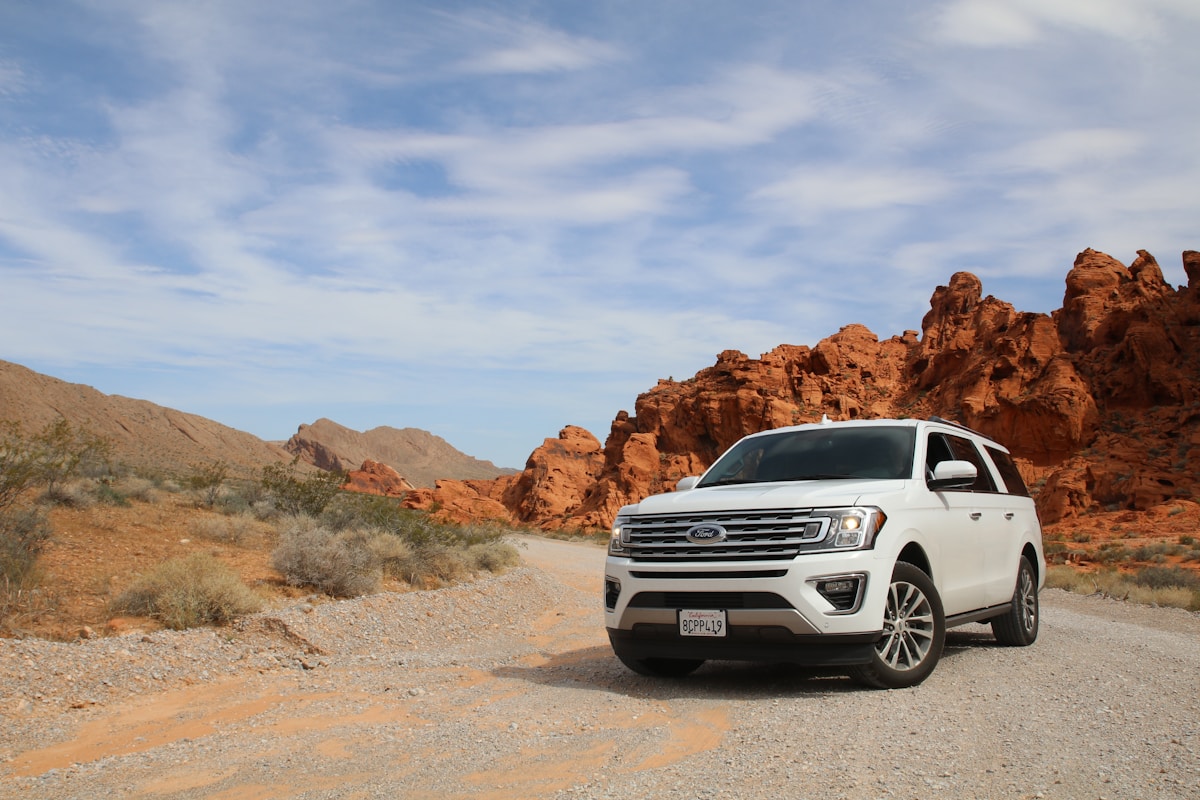
Ford Kuga PHEV
BMW 330e
Cupra Formentor eHybrid
Toyota RAV4 PHEV (2021–2022): the reliability and range champion
The RAV4 PHEV is the safest bet in this bracket, and the one to choose if you want maximum electric range with minimum worry. Its 46-mile WLTP figure is the highest here, and crucially it holds up better than rivals in cold weather — owners typically see 30–34 miles in UK winter, where others drop further. That real-world retention, combined with Toyota's well-earned reputation for hybrid dependability and a near-spotless recall history, makes it the standout for buyers who plan to keep the car for years.
It's a smooth, refined, genuinely practical five-seat SUV with a 490-litre boot, and its strong residual values mean it holds its money better than almost anything else on this list. Look for Dynamic or Dynamic Force trims at £17,500–£20,000.
The trade-offs are price and presentation. It's the most expensive car here, the infotainment feels dated next to the Korean rivals, and there's no all-wheel drive on the base PHEV trim. None of that undermines the core appeal: for low-stress, long-term PHEV ownership, the RAV4 is the most rational choice in this guide.

Hyundai Tucson PHEV (2021–2023): the comfortable, well-warranted all-rounder
The Tucson PHEV is the value-led comfort choice, pairing strong real-world range with the reassurance of Hyundai's transferable six-year warranty — cover that is often still active on 2021–2023 examples. Its 38-mile WLTP rating translates to a usable 26–30 miles in winter, and the smooth 1.6T petrol engine is well-matched to the electric motor for relaxed, refined progress.
Inside, it's one of the best in this group: the 558-litre boot is the largest here, the infotainment is excellent, and the cabin quality genuinely punches above the price. As a long-distance motorway cruiser, it's hard to fault, and a 4WD-e system is available on higher trims if you want the extra security.
The caveats are modest. Real-world range trails the Kia Sportage slightly, the car is heavier than it looks so economy suffers on longer runs once the battery is depleted, and some early examples had software glitches that were usually resolved by updates. At £16,000–£19,500 with warranty still in play, the Tucson is one of the strongest buys in the segment.

Kia Sportage PHEV (2022–2023): the newest tech and biggest battery
The Sportage PHEV is the freshest car in this bracket — the Mk5 only arrived in 2022, so used examples are very low-mileage and recent. It also has the largest usable battery in the class at 13.8kWh, which underpins the best real-world range here: 28–33 miles in winter against a 43-mile WLTP figure. Many examples still carry a meaningful chunk of Kia's seven-year warranty, so check the remaining cover carefully before buying.
The interior is a highlight, with best-in-class infotainment built around a large portrait screen, and a practical, well-packaged 540-litre boot. It's a thoroughly modern, well-equipped family SUV.
The main drawback is the dual-clutch gearbox, which can feel hesitant at low speeds in stop-start traffic. Entry trims are also rare at this price, so you're mostly looking at high-spec GT-Line S cars, and the interior plastics aren't quite as premium as the BMW's. At £17,000–£20,000, though, the Sportage offers the most up-to-date package on this list.

Ford Kuga PHEV (2021–2023): the best value — once the recall is verified
The Kuga PHEV is the value pick of this group, priced below its real-world quality precisely because of the well-publicised battery recall that affected it. Address that one issue and you get a comfortable, well-equipped family SUV with relaxed motorway manners and a wide dealer network that makes servicing straightforward. Its 35-mile WLTP range delivers 22–28 miles in winter, and the 14.4kWh gross battery (11.8kWh usable) is competitive for the class.
The non-negotiable caveat is the recall. Ford issued a stop-sale in late 2020 following a small number of battery-related incidents during charging, with a software fix rolled out from early 2021. Before buying, confirm in writing with the seller — and independently via Ford's recall checker — that the update has been applied. Any car that can't confirm this should be walked away from.
The other compromises are the smallest boot of the SUVs here at 411 litres (the battery intrudes) and a 1.5T engine that's less refined than the Korean rivals. But at £14,500–£18,000 for a verified, post-recall car, the Kuga is a lot of PHEV for the money.

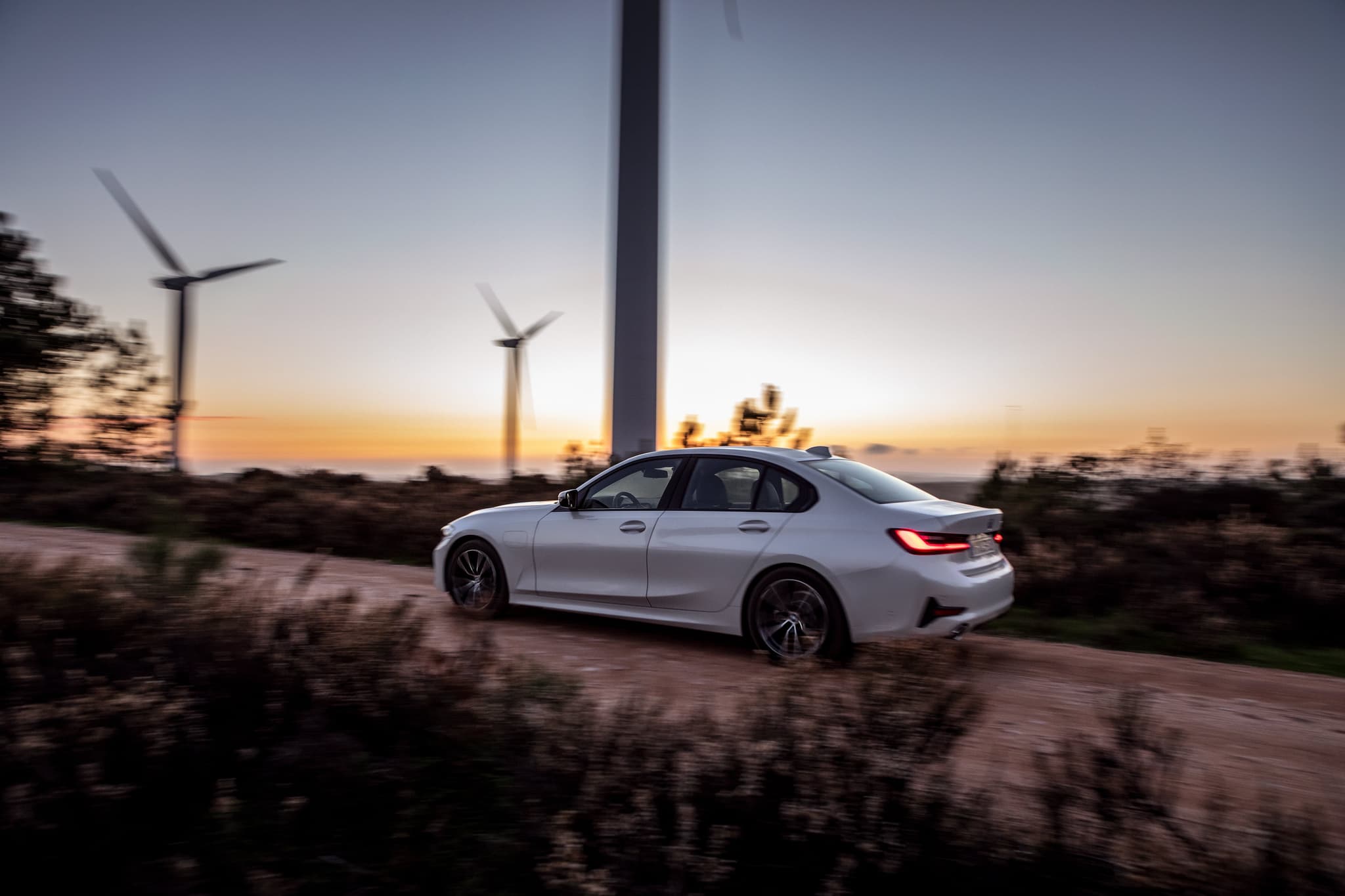
BMW 330e (2019–2022): the driver's PHEV
The 330e is the car for buyers who refuse to let efficiency dull the drive. This is a proper BMW 3 Series first and a plug-in hybrid second — the dynamics are the best in this group by a clear distance, the cabin is genuinely premium, and the petrol engine delivers strong performance even when the battery is depleted. The XtraBoost function briefly unlocks 292bhp combined for overtakes, and it's available as both a saloon and the more practical Touring estate.
On 2021-onwards cars the 37-mile WLTP range yields a usable 22–27 miles in winter, comfortably covering most commutes on electricity alone.
There are real costs to factor in. It carries the highest insurance group here at 33–36, BMW servicing costs more than the Korean rivals, and the saloon's 375-litre boot is on the small side. Critically, pre-2021 models have a much shorter 25-mile WLTP range, so check the year carefully. But for £16,000–£20,000, no other PHEV in this bracket is as rewarding to drive.
Cupra Formentor eHybrid (2021–2023): the sporty, distinctive choice
The Formentor eHybrid is the most engaging PHEV SUV in this bracket — the car for anyone who wants their plug-in hybrid to feel sporty without sacrificing practicality. A lower driving position than its rivals gives it a more car-like, planted feel, the DSG gearbox works smoothly with the hybrid system, and the 204bhp and 245bhp versions are both genuinely worth having. Distinctive styling inside and out sets it apart from the mainstream crowd.
Its 37-mile WLTP range delivers 24–30 miles in real-world winter use, and because it shares the VW Group MQB platform, parts and servicing are well supported despite the badge being newer to UK buyers.
The trade-offs reflect that newness. Cupra's dealer network is smaller than the mainstream rivals, the 420-litre boot is reduced versus the non-hybrid Formentor, and it remains less of a known quantity than the Toyota or Hyundai on the used market. But for £16,500–£19,500, the Formentor is the enthusiast's pick of this group.

Comparison
| Spec | Toyota RAV4 PHEV(2021) | Hyundai Tucson PHEV(2022) | Kia Sportage PHEV(2022) | Ford Kuga PHEV(2021) | BMW 330e(2021) | Cupra Formentor eHybrid(2022) |
|---|---|---|---|---|---|---|
| Price | ££17,500-£20,000 | ££16,000-£19,500 | ££17,000-£20,000 | ££14,500-£18,000 | ££16,000-£20,000 | ££16,500-£19,500 |
| boot space | 490 litres | 558 litres | 540 litres | 411 litres (PHEV, smaller than petrol Kuga) | 375 litres (saloon) | 420 litres |
| reliability | Excellent — best in class | Very good — transferable 6-year warranty a bonus | Very good — 7-year warranty, check remaining cover | Good post-recall — verify software update is confirmed | Good — typical BMW electrical complexity; check service history | Good — VW Group platform well-supported |
| fuel economy | Up to 282mpg WLTP (petrol only: ~40mpg) | Up to 201mpg WLTP (petrol only: ~38mpg) | Up to 201mpg WLTP (petrol only: ~39mpg) | Up to 201mpg WLTP (petrol only: ~37mpg) | Up to 188mpg WLTP (petrol only: ~42mpg) | Up to 235mpg WLTP (petrol only: ~40mpg) |
| electric range | 46 miles WLTP / ~32 miles real-world (winter) | 38 miles WLTP / ~28 miles real-world (winter) | 43 miles WLTP / ~30 miles real-world (winter) | 35 miles WLTP / ~25 miles real-world (winter) | 37 miles WLTP / ~24 miles real-world (winter) | 37 miles WLTP / ~27 miles real-world (winter) |
| insurance group | 27-31 | 29-33 | 29-33 | 26-30 | 33-36 | 28-33 |
| Pros |
|
|
|
|
|
|
| Cons |
|
|
|
|
|
|
Ford Kuga PHEV: always check the recall
Ford issued a stop-sale on the Kuga PHEV in late 2020 following a small number of battery-related incidents during charging. A software update was rolled out from early 2021. Before buying any used Kuga PHEV, confirm with the seller — and verify independently via Ford's recall checker — that the battery management software update has been applied. Any car that cannot confirm this should be avoided.